


The new distribution partnership model
Contractors and facility managers face mounting challenges: projects require more complex integration, skilled labor remains scarce, and infrastructure demands continue to grow. Meanwhile, aging systems need urgent modernization, energy requirements surge, and supply chains face ongoing disruption.
The solution extends beyond better products. It requires a fundamentally different distribution partnership.
Traditional distributor relationships focus on transactions: products, pricing, and delivery. Today’s leading distributors focus on outcomes: project success, operational efficiency, and strategic advantage, as an extension of their product portfolio. Leading contractors and facility managers partner with distributors who bring technical expertise, project management capabilities, and value-added services.
Turtle has spent over 100 years evolving into this type of partner. This report examines five critical trends driving this transformation and demonstrates how the right distribution partnership transforms today’s challenges into competitive advantages.
Current project realities
Three universal challenges impact every electrical project today:
- The labor shortage: 20,000 electricians will retire in the next two years
- Increased complexity: Today’s projects integrate IT/OT systems, require specialized compliance, and demand expertise across multiple technologies.
- Accelerated timelines: Infrastructure modernization spending increases 600%, from $50 billion to $350 billion over the next decade, while execution windows shrink.
These challenges will impact your next project. The question becomes whether you have the right partner to navigate them successfully.
Is your infrastructure keeping pace with today’s demands?
Trend #1: Aging infrastructure and modernization imperatives
The challenge
Key drivers:
- Industrial automation evolution: Traditional control systems transition to intelligent, data-driven platforms that provide visibility.
- Power infrastructure limitations: Most facilities lack adequate capacity for modern demands, particularly EV charging and data centers.
- Material and component shortages: Critical components like switchgear and transformers face up to two-year lead times.
- Regional economic pressures: While infrastructure modernization accelerates, high-cost regions like New York/New Jersey see manufacturing contract.
Where the opportunity lies
The complexity involved in infrastructure modernization projects creates demand for distributors with depth and breadth of experience. Contractors, engineering procurement and construction (EPC) contractors, and end-users seek partners who bring comprehensive knowledge of the customer and a network of proven partners upstream and downstream.
Turtle Take: Your distributor partner can help map modernization journeys and provide end-to-end support, including identifying and sourcing technologies and solutions, facilitating systems implementation and integration, and providing ongoing expertise and hands-on support. We cut through complexity with deep technical and project management expertise.
How is your organization addressing the growing gap between retiring experienced workers and increasing technological demands?
Trend #2: Workforce challenges
The challenge
Labor shortages and an aging workforce reshape operational priorities across sectors. Nearly 25% of the manufacturing workforce exceeds 55 years old. As a result of labor constraints and increasing labor costs, contractors and end-users must accomplish more with less. This fuels the need for smart technologies that enable automation and other approaches to fill the gap.
Key drivers:
- Aging electrician demographics: Approximately 20,000 electricians retire in the next one to two years, creating critical labor shortages and higher labor costs while electricity demand surges.
- Resource efficiency focus: Organizations focus on “doing more with fewer resources” due to labor constraints.
- Operating cost inflation: Labor shortages drive significant increases in operating costs, especially for smaller projects.
- Cross-industry knowledge transfer: Urgent need to apply automation expertise from traditional sectors to emerging areas.
Where the opportunity lies
Labor shortages among electricians and other skilled trade professionals intensify, creating opportunities for distributors to help mitigate workforce challenges through integrated automation solutions and on-site expertise.
Turtle Take: As workforce challenges intensify, distributors serve as an extension of your team and provide “one hand to shake.” We provide on-site expertise and boots on the ground to help with installations and service, while delivering integrated automation solutions to ease workloads and improve efficiency.
How can your distributor support you with today’s energy-related challenges?
Trend #3: Electrification and the changing energy landscape
The challenge
Demand for electricity in the U.S. grows 50% by 2050. Businesses and utilities continue to look for ways to diversify their energy sources to meet growing energy needs and build resilience. Agility and energy source integration become key: combining traditional and renewable generation in complementary ways to ensure energy readiness.
Key drivers:
- Electrification requirements: Rapid adoption of electric vehicles fuels demand for more comprehensive solutions and deep expertise, particularly in multi-unit residential buildings.
- Rebate-driven opportunities: Utility rebates can significantly offset installation costs of electrification solutions, though these programs often come with limited funding windows or application deadlines.
- Regional implementation differences: The West Coast leads environmental initiatives, with varying approaches across regions and an uncertain federal regulatory landscape.
- Energy efficiency priorities: LED lighting upgrades, energy management systems, and optimization technologies gain traction.
- Specialized environmental applications: Port environments require ruggedized equipment due to harsh conditions.
Where the opportunity lies
The growing energy transition creates demand for distributors who can help electrical contractors and end-users adapt to meet their growing energy needs and navigate a changing federal regulatory landscape.
Turtle Take: Distributors play an instrumental role in helping customers solve energy challenges by delivering energy-efficient technologies and solutions, enabling EV adoption, delivering products and services to support alternative energy projects, providing energy audits and energy efficiency analysis tools, and tracking and navigating regulatory developments and incentive opportunities.
Project spotlight: East Coast utility fleet electrification
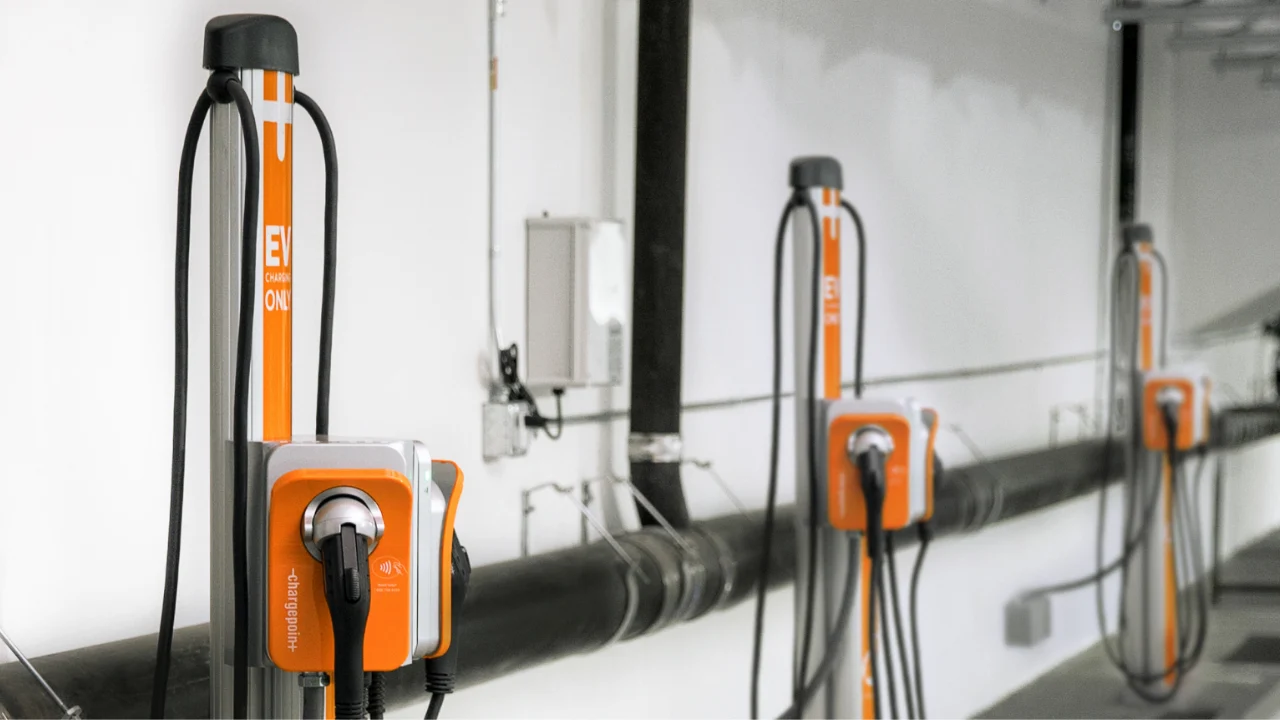
The challenge
A renewable utility company needed to transition its entire fleet from internal combustion to electric vehicles across multiple independent sites, each with different charging requirements.
Project scope
Multi-million dollar budget, decentralized purchasing approach, diverse site requirements, and a customer new to Electric Vehicle Supply Equipment (EVSE) procurement.
Our approach:
- Single point of contact: Managed relationships with ChargePoint and multiple site contractors.
- Streamlined procurement: Consolidated shipments from our warehouse, eliminating material loss risk.
- Simplified ordering: Created custom processes for sites handling EVSE procurement initially.
- End-to-end management: Handled product selection through final installation.
Results
Complete fleet electrification delivered on schedule, establishing the foundation for ongoing sustainability goals.
Are you working with a distributor who helps you map out a clear path to digital integration?
Trend #4: Digital transformation and industry integration
The challenge
Technology convergence creates opportunities and challenges. While there is increasing demand for integrated digital solutions to help optimize systems performance and build resilience, contractors and operators want partners who can break down digital transformation into manageable pieces. That means helping them identify and implement practical intelligent systems and solutions that address specific operational needs and deliver measurable business value.
Key drivers:
- IT/OT integration: Information technology networks increasingly integrate with previously isolated operational technology systems.
- IoT device networks: Sensors and connected devices provide visibility into operations.
- AI-enhanced predictive systems: Advanced analytics enable maintenance optimization and operational improvements.
- Process optimization potential: AI applications dramatically reduce time required for engineering approvals, specifications review, and planning.
- Cybersecurity risks: As cyberattack risks intensify, there is growing need for end-to-end solutions and expertise that span IT/OT to unify protection, drive compliance, and build resilience.
Where the opportunity lies
Contractors and end-users want to work with distributors who make it easier to identify, map out, and implement practical digital solutions, whether connected products or higher-level integrated systems.
Turtle Take: Distributors with deep customer and sector knowledge, best-in-class technology partners, and technical expertise ensure seamless integration, as well as reliable, secure, and responsive service to help customers troubleshoot quickly and get the most from their data and their investment.
Does your distributor provide insights to help you assess the business risks of regulatory changes?
Project spotlight: Northeast commuter rail transformation

The challenge
A major Northeast commuter rail authority needed to transform the rider experience across its extensive network through a comprehensive Customer Service Initiative (CSI). The project required managing procurement, inspection, tracking, and delivery of extensive equipment; coordinating receipt and storage of large, bulky items; managing schedules and scope across multiple contractors; and accommodating custom design requirements with frequent modifications. The authority selected Turtle as their design-build partner to deliver professional services, materials, and advanced equipment.
Project requirements:
- Engineering and integrating systems across 16 train stations
- Managing nearly 2,000 project drawings through review and approval
- Coordinating multiple contractors, system integrators, and technical specialists
- Developing custom solutions in response to evolving design requirements
- Ensuring all systems met strict safety and operational standards
Our approach
We brought technical expertise in systems integration, custom development, and project management in high-stakes environments. Our proven collaboration approach fostered seamless coordination and effective communication across all project stakeholders.
What we delivered:
- Systems integration: Engineered and integrated public address/visual information systems, security, and network systems at 16 stations
- Connectivity solutions: Deployed public and private Wi-Fi systems at three additional stations
- Custom development: Created proprietary software, firmware, and integrated environmental sensors to upgrade monitoring systems
- Project management: Produced and managed nearly 2,000 project drawings with meticulous review and approval processes
- Single point of contact: Managed complex Cisco equipment pipeline involving multiple contractors and vendors for asset management, configuration, testing, installation, and deployment
- Adaptive execution: Managed evolving requirements across equipment, materials, field technicians, and technical specialists to meet multiple station deadlines
Results
Enhanced connectivity and information systems now serve millions of commuters daily. The project was delivered on time and within budget, establishing new standards for transportation infrastructure modernization.
Trend #5: Geopolitical supply chain concerns
The challenge
International tensions, including changing trade policies and tariffs, affect equipment and material availability, and raise concerns about increased supply chain disruptions and impeded business visibility. Amid this uncertainty, it’s more important than ever for businesses to be agile, execute with speed, and stay aware of changing regulations and emerging business opportunities and threats.
Key drivers:
- Tariff considerations: Regulatory shifts require both immediate tactical responses and long-term strategic adaptation
- Domestic manufacturing growth: Major investments in U.S. manufacturing facilities are driven by policy initiatives and security concerns
- Build America, Buy America (BABA) compliance: There is increasing interest in Buy America compliance and domestic alternatives
- Extended payment terms: Industry norm shifts toward 120-day payment terms, requiring distributors to finance customer inventory
- Geo-dependencies: Certain areas of the design-build and enterprise ecosystem face greater risk from global trade tensions
Where the opportunity lies
Supply chain volatility creates demand for distributors who can help electrical contractors and end-users track and assess evolving trade policies and regulations and their potential business impacts.
Turtle Take: Distributors with deep customer and sector knowledge, and trusted partner networks, help organizations build risk mitigation strategies and move quickly and nimbly to identify new solutions, including alternative providers. We track regulatory changes and assess their business impact so you can focus on execution.
What would it mean for your business to have a distribution partner with over 100 years of experience solving these exact challenges?
Why traditional distribution partnerships fall short

The electrical distribution industry faces an inflection point. Infrastructure complexity, workforce shortages, energy transformation, digital integration, and supply chain volatility represent interconnected forces that demand a different approach.
Traditional distributor relationships focus on transactions: products, pricing, and delivery.
Next-generation partnerships focus on outcomes: project success, operational efficiency, and strategic advantage.
Turtle’s approach: 100+ years of applied expertise
Turtle delivers comprehensive solutions that extend beyond traditional distribution through proven capabilities across multiple sectors.
We solve complex problems
Our expertise spans ports, industrial and commercial construction, municipalities, and data centers. This cross-sector perspective enables us to handle multi-faceted challenges that require tested experts who deliver results.
We extend your team capabilities
Labor shortages don’t have to impact your projects. Our technical advisors and field support specialists provide on-site expertise and hands-on assistance when and where you need it.
From regulatory compliance to supply chain disruptions, we track changes that could impact your business and help you stay current. We turn complexity into clarity and next-generation concepts into operational impact.
What this means for your next project
For electrical contractors
The projects you bid require more than competitive pricing—they demand technical expertise, project management capabilities, and reliable execution. The right distribution partner differentiates profitable growth from costly overruns.
Consider: Does your current distributor provide technical support during installations? Can they help you navigate supply chain challenges before they impact your timeline? Do they bring cross-industry expertise to solve specific problems?
For facility managers
Your operational demands intensify while internal resources remain constrained. You need partners who understand your business, can extend your team’s capabilities, and deliver solutions that work in your environment.
Evaluate: When did your distributor last provide strategic recommendations that improved your operations? Can they help you navigate regulatory requirements and utility rebate programs? Do they provide ongoing support rather than one-time transactions?
Partnership that delivers results
The electrical industry changes rapidly. Infrastructure demands surge, skilled labor remains scarce, technology advances quickly, and supply chains face ongoing uncertainty.
These challenges create opportunities for contractors and facility managers who partner with distributors capable of delivering comprehensive solutions.
Turtle takes away:
- Distribution complexity and supply chain uncertainty
- Unreliable service and delivery delays
- Digital solutions uncertainty and implementation challenges
- Workforce challenges and skilled labor shortages
- Regulatory compliance headaches
- Energy efficiency planning complexity
Turtle delivers:
- Technical expertise across multiple sectors (ports, industrial and commercial construction, municipalities)
- Project management experience for complex modernization initiatives
- Industry-leading partnerships
- Customized, turnkey solutions that fit your specific needs
- Strategic material management with real-time availability tracking
- On-site support to extend your workforce capabilities
Ready to get started?
For contractors: Contact us to discuss how we support your next complex project with technical expertise and reliable execution.
For facility managers: Schedule a consultation to explore how we extend your team’s capabilities and optimize your operation.
Let’s discuss your project requirements
