

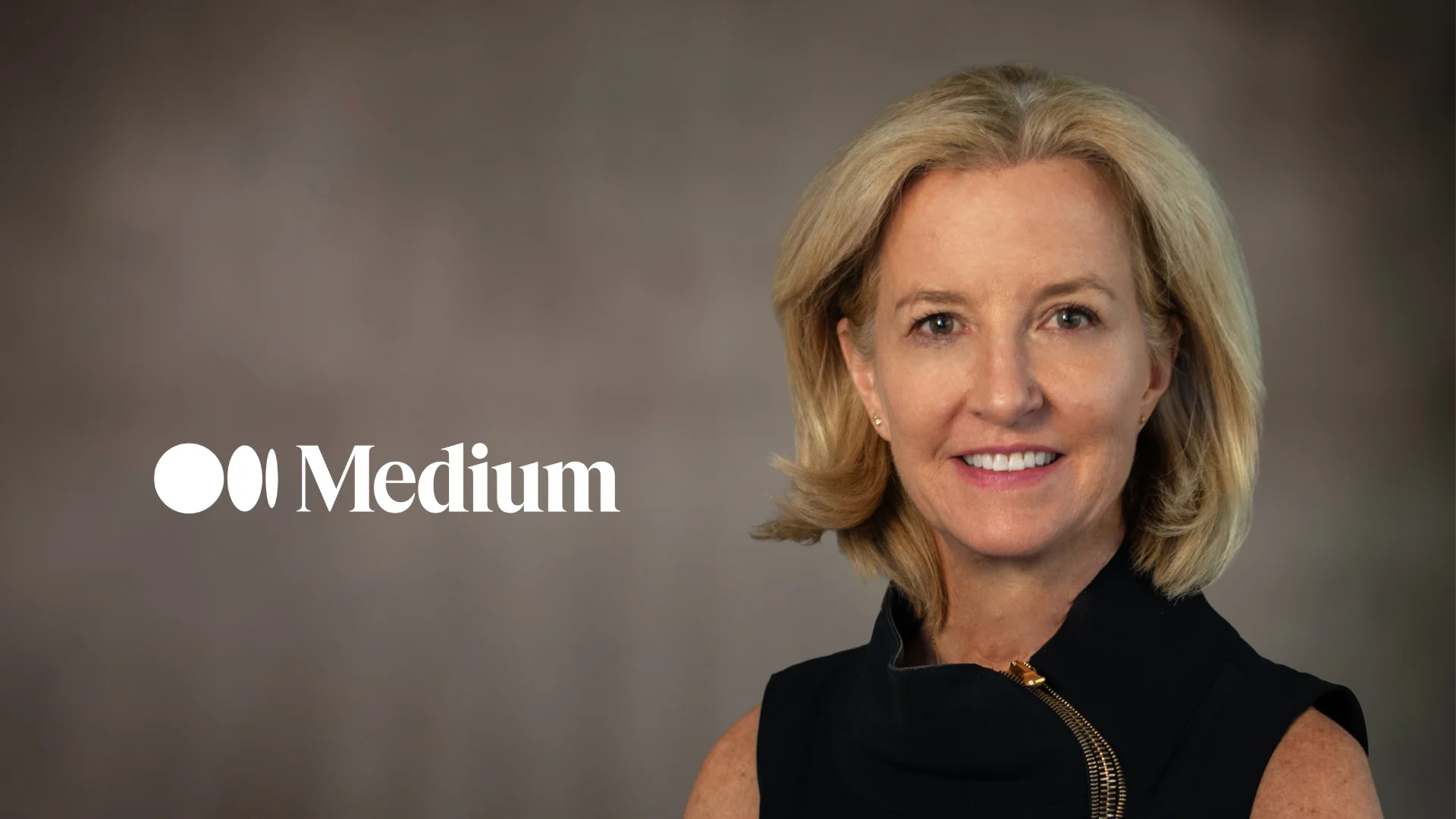
For the original interview by Rachel Kline for Authority Magazine, click here.
In a world where the pace of change is faster than ever, the power of great ideas has never been more crucial. And yet, developing these ideas into impactful, market-ready products can be an immense challenge. The best products are not born overnight, they’re the result of dedicated ideation and innovation processes. These processes aren’t always easy, but they’re necessary and can be catalyzed with the right strategies and approaches. How do you foster a culture of creativity within a team? How can one rapidly translate ideas into prototypes and eventually finished products? How can roadblocks be anticipated and managed effectively to avoid unnecessary delays. In this series, we’re eager to explore insights, stories, and actionable tips from those at the forefront of ideation and innovation. As part of this series, we had the distinct pleasure of interviewing Jayne Millard.
Jayne Millard is the Chairman and CEO of Turtle & Hughes, a fourth-generation family-owned business. Co-founded by her great-grandfather in 1923, Turtle & Hughes is one of the largest independent electrical and industrial distributors in the nation.
Thank you so much for joining us in this interview series! Before diving in, our readers would love to learn more about you. Can you tell us a little about yourself?
I’m Jayne Millard, Co-CEO and Executive Chairman of the Board of Turtle, a 100% women-owned business with a century-long legacy in electrical and industrial distribution and smart infrastructure. We supply products, solutions, and expertise to ports, airports, utilities, hospitals, and major industrials. We support landmark infrastructure projects, from the construction of Rockefeller Center in the 1930s — including providing the lights for the very first tree — to more recently helping build Hudson Yards, rebuild the World Trade Center after 9/11, and renovate LaGuardia Airport. As the third consecutive woman in my family to lead Turtle, I’ve had the honor of helping our company navigate major industry disruption and become a pacesetter in developing ultra-efficient, sustainable solutions to transform modern infrastructure.
What led you to this specific career path?
My path has been deeply influenced by my grandmother, Ethel Turtle, who took ownership of our company in 1935 — just years after women could legally own property in the U.S. — and my mother, Suzanne Turtle Millard, who took over from Ethel and continued to strengthen and grow the business. I didn’t set out thinking I’d run the company one day. Earlier in life, my passion was modern dance, and I had the great fortune to work for Martha Graham, the dance trailblazer known for her boldness and creativity. The more I became involved with Turtle, I began to see the incredible shift taking place in modern infrastructure, from digital transformation to sustainability to creating shared value. I realized I could bring my own interest in innovation and creativity and apply that at Turtle. It’s a big proverbial leap from modern dance to modern infrastructure, but I find the work to be just as exciting and fascinating.
Can you share the most exciting story that has happened to you since you began at your company?
One of the most rewarding moments has been launching our Turtle TMRW Lab, a business incubator designed to help our customers bypass traditional corporate roadblocks and fast-track innovation. Initially the Lab was an internal initiative. We brought together cross-functional teams to think boldly, and from it came our electrification division, which now develops EV infrastructure and energy management solutions. That leap didn’t just change our company’s direction, it showed what’s possible when you nurture talent, encourage collaboration, and trust the next generation. Today, we’re making this experience available to our customers, creating customized innovation sessions for their teams to fuel new ideas, identify new opportunities, and create roadmaps to adopt new technologies and approaches to drive growth.
What are some of the most interesting or exciting projects you are working on now? How do you think that might help people?
Every day we partner with customers to develop solutions that integrate technology and sustainability to make businesses and communities more efficient and resilient. We’ve delivered the technology and know-how to help transform the rider experience at a major commuter railway. We’ve provided the equipment and expertise to power Hudson Yards’ innovative microgrid. We’ve electrified the fleets of major corporations, and provided digital and automated solutions to keep data centers around the country operating at peak performance. These engagements lead to tangible change, from reducing Scope 3 emissions, to future-proofing power systems, to diversifying energy sources to meet growing energy demands. We’re also investing in disruptive technologies, from resilient energy storage systems, to AI tools that track carbon impact, to building our own AI-powered pricing system to transform customer response times.
You’re a successful business leader. What are three traits about yourself that you feel helped fuel your success? Can you share a story or example for each?
- Visionary, Big Picture Thinking: When we began talking about electrification years ago, many saw it as aspirational. But I knew we had the talent, tools, and commitment to help our customers to lead. That vision gave rise to our EV division, which is now one of our fastest-growing sectors.
- Resilience: We’ve faced everything from globalization to digital disruption and beyond. Through it all, we’ve stayed grounded by continuously adapting. We’ve done this by creating a culture where people feel empowered to bring bold ideas and by staying true to our values, which focus on people, planet, and long-term partnerships.
- Radical Collaboration: I believe the best ideas come from unexpected places. That’s why we launched the Turtle TMRW Lab: to dismantle silos and spark innovation. The best breakthroughs come when teams challenge each other, work across disciplines, and stay connected to the mission.
Do you have any mentors or experiences that have particularly influenced your approach to product ideation and innovation?
My mother and grandmother were my earliest mentors. They taught me the importance of listening, of being bold yet grounded. Their influence helped shape our culture at Turtle, where every voice matters, innovation starts with empathy, and our customers are our number one focus.
In your experience, what is the anatomy of a strong product idea?
It starts with a real-world problem, includes a diverse team of thinkers, and ends with measurable impact. Add efficiency, sustainability, and scalability, and you have something that can change lives.
What approach does your team use for coming up with new ideas for products and features?
We bring the right people to the table across divisions like procurement, tech, sustainability, and operations and co-create. Every new idea starts with listening and ends with an actionable roadmap rooted in results.
What is the story behind the most successful product or feature idea your team has ever had — what was the need, how did the idea come about, and what was the outcome?
When we saw gaps in EV infrastructure across our commercial clients, we mobilized. It wasn’t just about chargers, it was about systems integration, consulting, and future-proofing. The need was clear, but the execution required new thinking. That work is now helping our customers reduce emissions and modernize energy use across the country.
How does your product team manage new product and feature ideas?
We evaluate and incubate ideas in collaborative teams, identify measurable outcomes, and then quickly take action, guided by the EOS® (Entrepreneurial Operating System) framework. Innovation isn’t an initiative at Turtle, it’s part of our operating model.
What, in your view, is the biggest challenge with respect to innovation?
Inertia. Too many companies protect legacy systems instead of investing in better ones. We fight that by tying every initiative to purpose and long-term value.
Thank you for all of that. Here is the main question of our interview. Based on your experience, what are your “5 Tips for Accelerating Product Ideation & Innovation”? If you can, please share a story or an example for each.
- Lead with Purpose: Innovation without purpose and measurable goals is noise. Focus on impact, for your business and for the greater community.
- Build Cross-Functional Teams: Diversity of thought leads to better solutions. Innovation is fueled by different perspectives.
- Embrace Failure Early: Fast prototyping and feedback loops let us course correct quickly. Some of our best pivots began as “failures.”
- Listen to the End User: Whether it’s a facilities manager or a community leader, their insight shapes what actually works. Solutions must fit real people and real needs.
- Measure What Matters: We align our innovation metrics with impact, whether it’s tons of carbon reduced, dollars saved, or time gained.
We are very blessed that very prominent leaders read this column. Is there a person in the world or in the US with whom you would love to have a private breakfast or lunch, and why?
In our line of work, it’s hard to limit it to one person. At Turtle, we have the honor of supporting people who play an integral role in how we live today. Men and women who build and operate ports, airports, railroad hubs, hospitals, utilities, and major buildings, and who manage supply chains at the manufacturers that make the goods we all rely on each and every day. These people are quiet heroes, on the ground and in the field, who don’t get the spotlight enough. I try to meet and get to know as many as I can when I am at customer sites, and I am always amazed by the work they are doing, their commitment, and the difference they are making for their communities.
Let’s discuss your project requirements
