

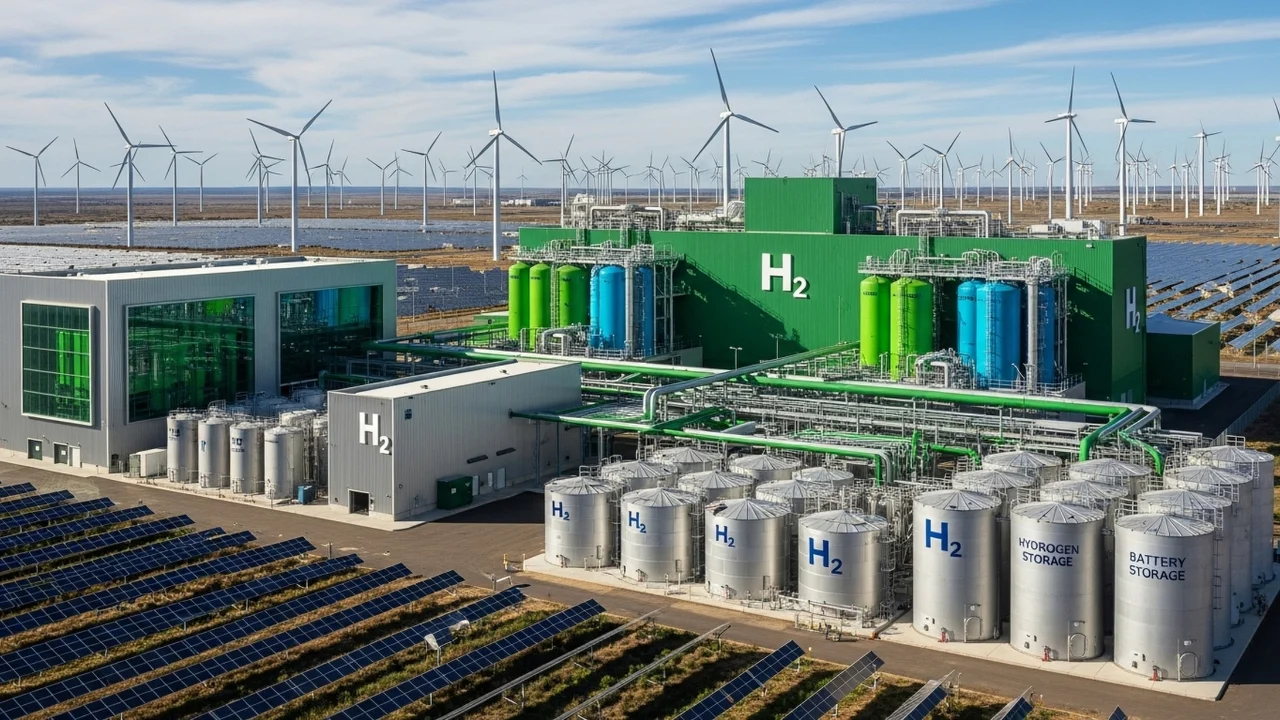
What is smart energy and why does it matter for industrial operators?
What exactly is smart energy? Here’s the straight answer: it’s what happens when you take your traditional power systems and integrate them with intelligent technologies, renewable sources, and smart controls. The result? Infrastructure that’s both resilient and cost-effective. Your power generation stops being this massive expense you just have to deal with and becomes an actual competitive advantage.
Key benefits:
- Reduces power quality disruption costs, the U.S. economy loses $104 billion to $164 billion annually to outages and $15 billion to $24 billion to power quality phenomena.
- Protection against rising downtime costs, 90% of mid-sized and large enterprises face $300,000 or more per hour of server downtime.
- Attracts premium property valuations as industrial facilities with energy resilience command higher rents and lease faster.
- Meets evolving regulatory requirements while gaining first-mover advantages in infrastructure modernization.
What are the four critical dimensions of energy resilience?
Here’s what we’ve learned after decades in the field. You need to master these four critical capabilities. Most companies are only doing one or two well. The successful operations? They’re nailing all four.
1. Supply continuity
Advanced backup systems combining traditional generators, renewable sources, and battery storage ensure uninterrupted operations. According to a survey of 251 commercial and industrial companies, 21% experienced a power outage once a month and 49% had an outage once a year.
2. Economic protection
Transform volatile energy costs into predictable, optimized expenses. Commercial and industrial outage costs range from $11,000 to $67,780 per MWh, making economic protection systems essential for operational stability.
3. Adaptability
Enable rapid response to changing conditions with flexible energy systems. As global grid digitalization investments grow from $81 billion in 2024 to $152 billion by 2030, adaptable systems future-proof operations.
4. Future readiness
Turn regulatory compliance requirements into competitive advantages through proactive infrastructure investments. Commercial electricity consumption will rise by 3% in 2025 and 5% in 2026, requiring enhanced infrastructure capacity.
Implementation steps:
- Conduct a comprehensive risk assessment identifying operational vulnerabilities.
- Develop integrated backup systems combining multiple power sources.
- Implement real-time monitoring and predictive analytics.
- Establish integrated energy teams that unite facilities, IT, operations, and finance personnel to accelerate strategic decision-making
What are the signs that your energy infrastructure needs upgrading?
Infrastructure modernization becomes critical when existing systems cannot support business growth and resilience needs. With the smart energy market valued at $191.57 billion in 2024 and projected to reach $459.17 billion by 2033, early adoption provides competitive advantages.
Next-generation solutions include:
- Bi-directional power systems enabling vehicle-to-grid capabilities.
- IoT sensors providing real-time system monitoring and predictive maintenance capabilities.
- Advanced cybersecurity protecting against the 95 human-related electric disturbances recorded in the first half of 2023, the most of any six-month stretch in the 21st century.
- Integrated renewable energy with storage systems supporting net-zero goals.
What are industry-specific smart energy applications?
Airports
Challenge:
Airports face unique energy demands with 24/7 critical operations, high passenger volumes, and sustainability mandates.
Solution:
- Advanced building management systems to monitor energy consumption across disparate systems.
- Microgrid infrastructure provides uninterrupted power for critical operations.
- Solar integration into unconventional spaces, including parking canopies, terminal roofs, and water bodies.
- Energy-as-a-Service models eliminate upfront capital costs while ensuring predictable energy expenses.
Hospital and healthcare facilities
Challenge:
Healthcare facilities cannot afford power interruptions that jeopardize patient safety.
Solution:
- Combined heat and power systems that provide efficiency with backup island-mode operation.
- Smart building management systems that use advanced sensors for optimal resource utilization.
- Battery energy storage and management systems to maximize renewable energy benefits.
- Energy-as-a-Service models that provide predictable monthly energy costs without capital diversion
Rail and transit infrastructure
Challenge:
Rail systems require massive energy loads with strict reliability requirements and growing electrification demands supporting sustainable transportation goals.
Solution:
- Regenerative braking systems that capture and redistribute energy.
- Smart substations with real-time monitoring and predictive maintenance.
- Integration with renewable energy sources and grid-scale storage.
- Advanced power management systems that distribute energy across rail networks.
Municipal and utility infrastructure
Challenge:
Municipal systems face aging infrastructure, limited budgets, and growing demands for reliable, sustainable energy services.
Solution:
- Smart grid deployment that enables real-time management of distributed energy resources.
- Advanced metering infrastructure that provides granular energy usage data.
- Microgrid development for critical facilities and resilience hubs.
- Integration of renewable energy sources with intelligent control systems.
Power and utility operations
Challenge:
Utility operations require sophisticated management of increasingly complex power systems with distributed resources, variable renewable generation, and growing electrification demands.
Solution:
- Advanced conductor technology and dynamic line rating systems that increase transmission capacity.
- AI-powered predictive maintenance that reduce equipment failures and outages.
- Grid digitalization enabling real-time orchestration of distributed energy assets.
- Cybersecurity measures protecting critical infrastructure from increasing threats.
What capabilities should you look for in an electrical distribution and infrastructure solutions provider?
System design and integration
- Technology-agnostic approach evaluating optimal solution combinations across manufacturers.
- Deep understanding of electrical and industrial distribution requirements.
- Systems integration expertise connecting diverse components.
- Forward compatibility ensuring adaptability to emerging technologies.
Industrial distribution expertise
- Experience in electrical and industrial distribution markets.
- Understanding of technical audiences including contractors, engineers, project managers, facilities, and procurement professionals.
- Local warehousing and logistics capabilities supporting complex project timelines.
- Established relationships with leading manufacturers and technology providers.
Value-added services
- Comprehensive energy audits identifying inefficiencies and opportunities.
- Strategic planning services aligning infrastructure investments with business objectives.
- Performance monitoring ensuring sustained benefits.
- Training and knowledge transfer supporting internal team development.
What ROI can you expect from smart energy investments?
How do you measure smart energy return on investment?
Smart energy investments deliver measurable returns through multiple value streams:
Cost savings:
- Energy cost reductions through efficiency improvements.
- Maintenance cost decreases via predictive analytics and improved equipment reliability.
- Regulatory compliance cost avoidance through proactive infrastructure investments.
Operational benefits:
- Improved system reliability reducing business interruption risks.
- Better forecasting and budgeting through predictable energy costs.
- Competitive advantages from superior infrastructure capabilities.
Strategic value:
- Higher property values from modernized, resilient infrastructure.
- Improved tenant attraction and retention in commercial properties.
- Enhanced corporate sustainability credentials supporting ESG objectives.
Getting started: Your smart energy roadmap
How do you begin a smart energy transformation project?
Step 1: Assessment and strategic planning
Partner with Turtle’s experienced team to conduct comprehensive energy audits identifying current inefficiencies, risks, and opportunities. Our century of electrical distribution expertise ensures thorough evaluation of your existing infrastructure and accurate assessment of improvement potential.
Step 2: Solution design and integration
Work with Turtle’s team to develop integrated modernization plans using our technology-agnostic approach and manufacturer partnerships. Our systems integration focus ensures optimal performance from component connections while maintaining forward compatibility.
Step 3: Phased implementation
Deploy upgrades systematically using Turtle’s proven project management methodologies and local logistics capabilities. Our field support team extends your workforce capabilities while ensuring minimal operational disruption during implementation.
Why partner with Turtle?
- Access to comprehensive electrical and industrial distribution expertise.
- Technology-agnostic approach ensuring optimal solutions regardless of manufacturer.
- Proven project management experience with complex infrastructure modernizations.
- Local support and logistics capabilities accelerating implementation timelines.
We remove:
- Energy disruption concerns and grid instability risks.
- Complex vendor coordination and project management challenges.
- Technology selection uncertainty across multiple manufacturer options.
- Implementation timeline pressures through superior logistics support.
We deliver:
- Multi-sector technical expertise spanning critical infrastructure applications.
- Comprehensive project management from assessment through enhancement.
- Access to industry-leading technology partnerships and manufacturer relationships.
- Customized, measurable solutions addressing specific operational requirements.
- Strategic planning services aligning infrastructure investments with business objectives.
- Ongoing support extending internal workforce capabilities.
Transform your energy infrastructure from cost center to competitive advantage. Contact Turtle to begin your smart energy journey with a partner who understands both the technical complexities and business imperatives of modern energy infrastructure.
Let’s discuss your project requirements
